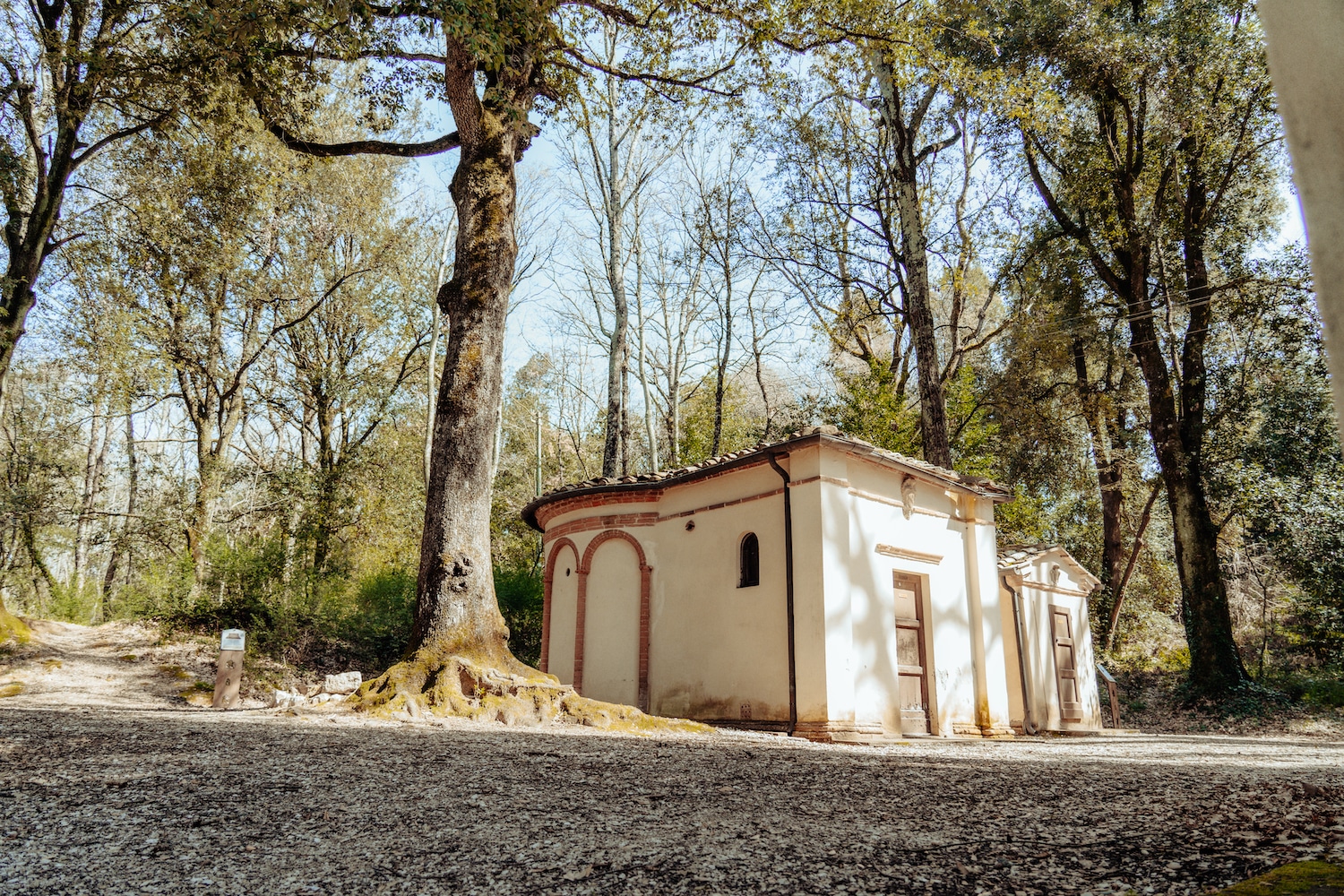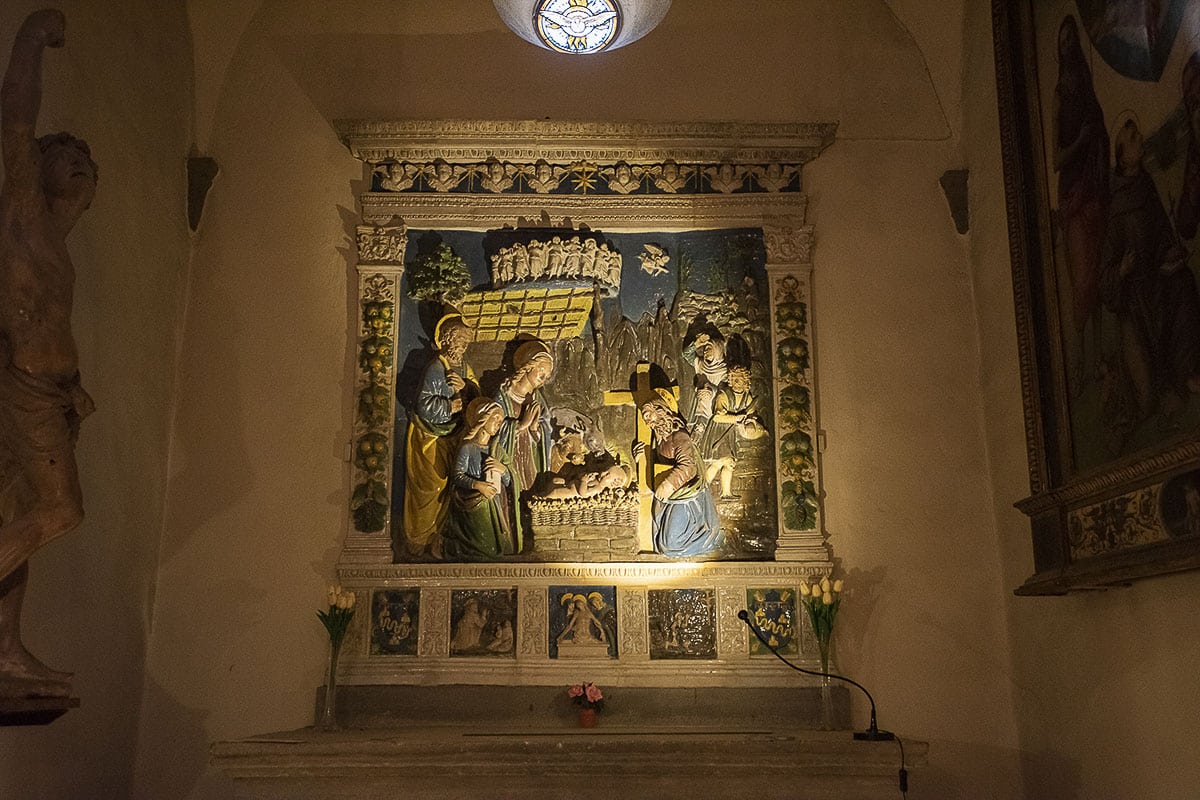
San Vivaldo is a place in Tuscany, but it is also a friar who has become part of the history of that place. Let us therefore learn more about Friar Vivaldo from San Gimignano and the stories and legends linked to his life and, consequently, to the Franciscan Jerusalem to which he is connected. Let us see what lies behind the figure of San Vivaldo, a cult figure for many people of faith.
The story of Friar Vivaldo
The story of Friar Vivaldo Stricchi from San Gimignano is full of pain and spirit of sacrifice for others, but also mystery and legend. It is said that Vivaldo Stricchi was born in San Gimignano, a small medieval town in Tuscany. His family owned fields and woods, and Vivaldo grew up developing a love for nature and solitude. Perhaps this is why he chose to become a Franciscan friar of the Third Order. If you are wondering who a Franciscan tertiary is, they are lay people who follow Franciscan spirituality throughout their earthly journey by joining the Franciscan Third Order.
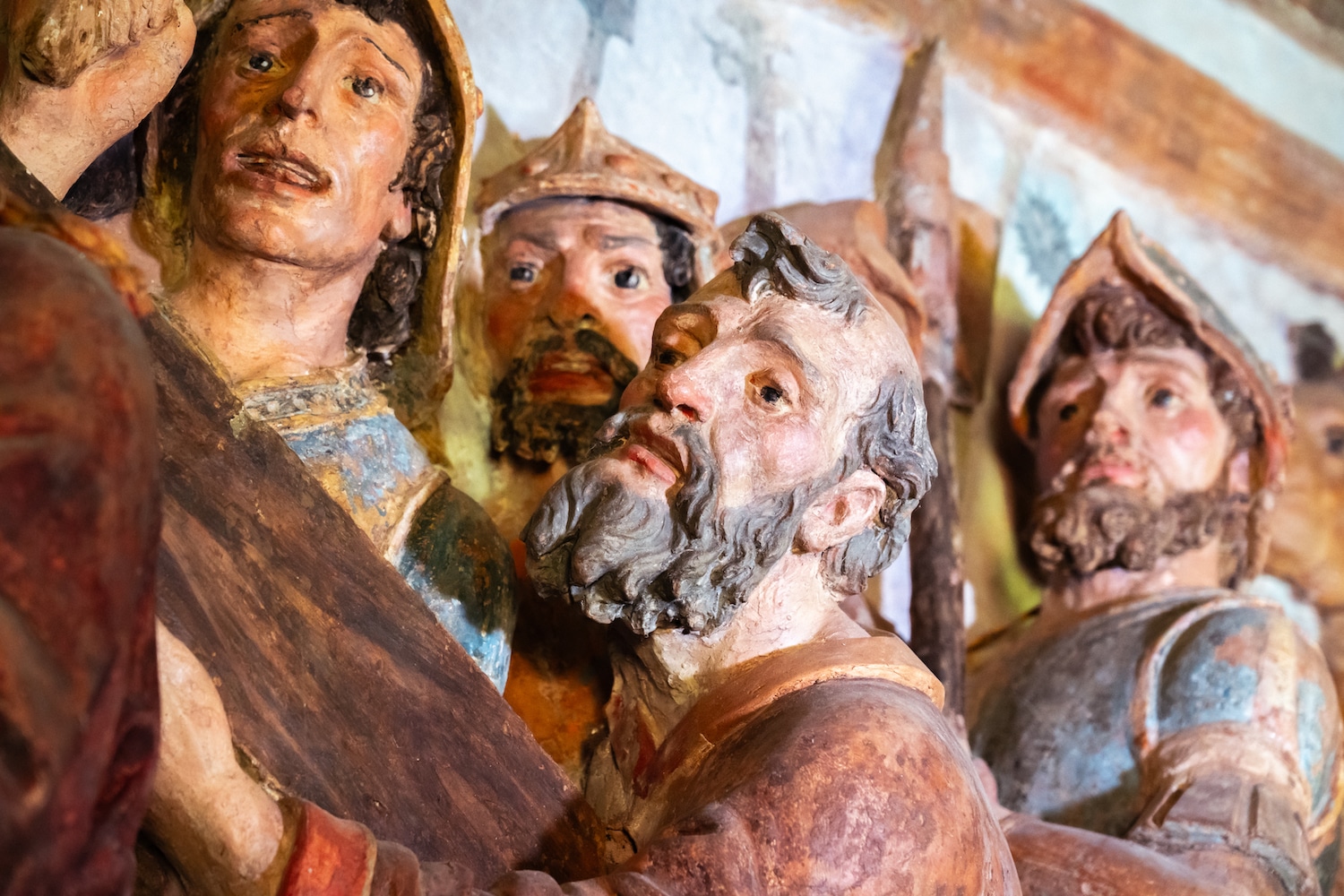
Friar Vivaldo in the Camporena Forest
After his mother’s death, he met Bartolo from San Gimignano, parish priest of the church dedicated to St. Nicholas of Bari in Picchena. Bartolo was a Franciscan friar who became a point of reference for Vivaldo. When Bartolo fell ill with leprosy, Vivaldo devoted himself to caring for lepers for twenty years. Following the death of his mentor in around 1300, Friar Vivaldo chose to live as a hermit in the forest of Camporena, a place that was not very hospitable at the time. Perhaps to atone for the sins of the world, he chose to live in the hollow trunk of a large chestnut tree. He remained there for another twenty years until his death on 1 May 1320. It is said that his body was found in the very trunk that had sheltered him for twenty years. Fra Mariano from Firenze, in his “Trattato del Terz’Ordine” (Treatise on the Third Order) in the early decades of the 16th century, describes Vivaldo from S. Gimignano as a “homo pio et devoto” (pious and devout man), so much so that when his body was found, the church of Montaione spontaneously rang its bells: ‘the bells began to ring and all the people ran to the place and took the holy body to Montaione and buried it in the church of that town, where his bones are still honourably preserved in the high altar’.
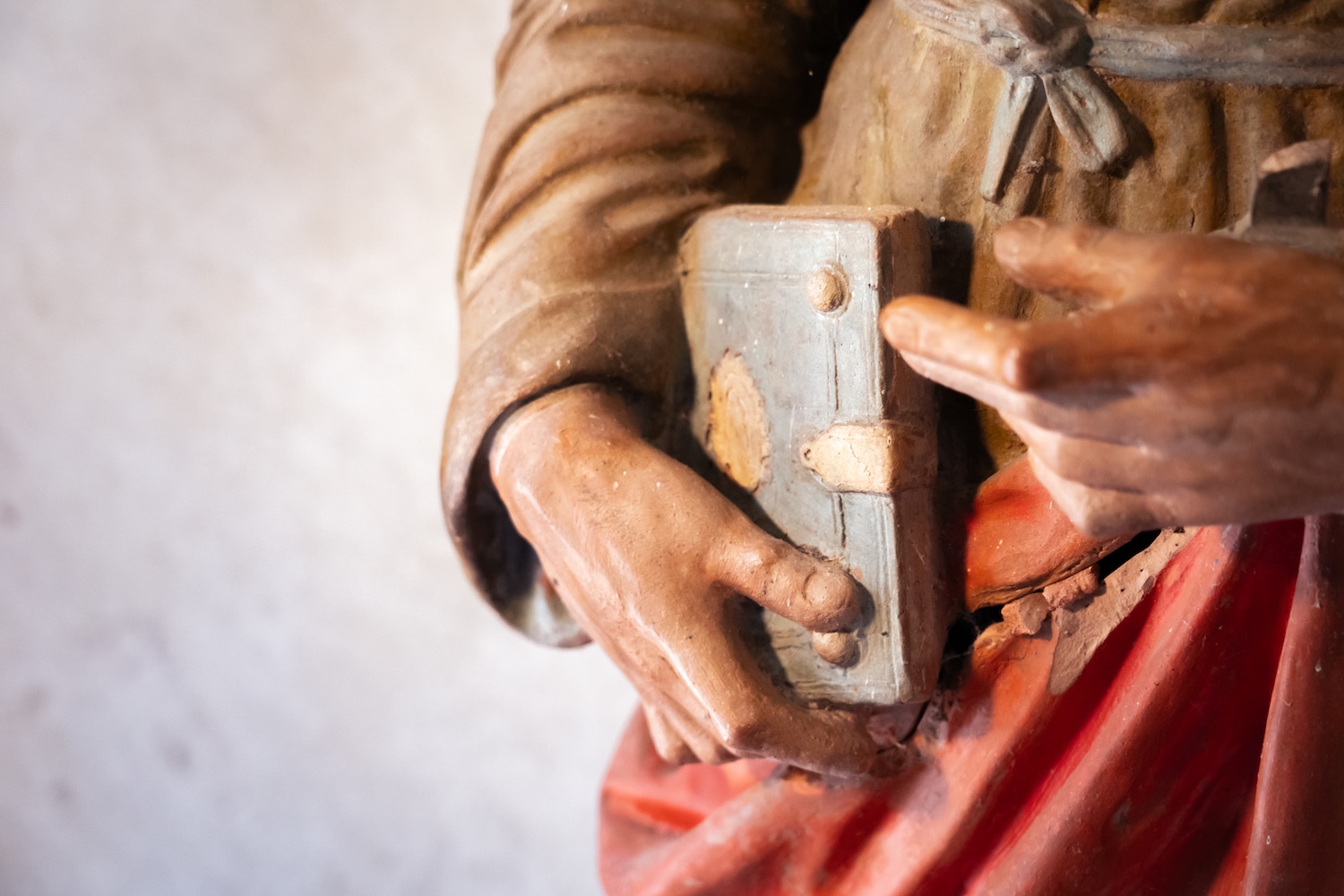
Origins of the cult of Saint Vivaldo
The legend linked to Friar Vivaldo still attracts numerous pilgrims and worshippers today, partly because Saint Vivaldo is linked to the religious complex located near his birthplace. In fact, when Pope Pius X confirmed the cult of Blessed Vivaldo on 13 February 1908, his body was transferred from the church of San Regolo to the church dedicated to him inside the convent of San Vivaldo, which took his name. The tomb of Saint Vivaldo is still there, but the chestnut tree where he took refuge is not, perhaps because it was gradually consumed by the faithful who wanted to take a piece of it with them.
Where is Saint Vivaldo
Despite the lack of concrete historical evidence about the life of San Vivaldo, he is still venerated for his contribution to Christian spirituality. His story continues to be handed down, including through the place that best represents the area: the Jerusalem of San Vivaldo, known as Sacro Monte or Jerusalem of Tuscany. The complex is located not far from the village of San Vivaldo, surrounded by greenery at an altitude of 416 metres above sea level. It is a place so steeped in spirituality that you simply must visit it to discover the legend of the friar, one of the first stories this place has to tell you.
Find out how to visit the Jerusalem of San Vivaldo